This batch of
Redbor Kale came to us from
Gee Creek Farm. As Lyle the farmer said "they have been frost kissed to make them nice and sweet." I believe that the various kales are the most successful of the greens, the kids seem to gobble it up. I know the Christina and Teacher Beth especially love the kale days. Loaded with vitamins
A,
C, and
K, and packed with
fiber,
calcium and
potassium, kale should be staple of everyone's winter diet.
There are so many ways to cook kale; braising, steaming, stirfry, or it can just be eaten raw. At ChildRoots I've found that roasting is the way go. I love the effect that roasting has on kale, it gives it a little more sweetness and you don't lose so much of the texture.
After soaking the kale in cold water, let it drain for a few minutes.

Then lay it flat on a large cutting board. Notice how I pulled the twisty tie ends toward the end of the stems.

Then slice the kale in a width the you like, being aware of the twisty tie. We feed the stem ends to the guinea pig, rats, and Bunny FuFu.

Toss the kale strips with olive oil, thyme and salt.

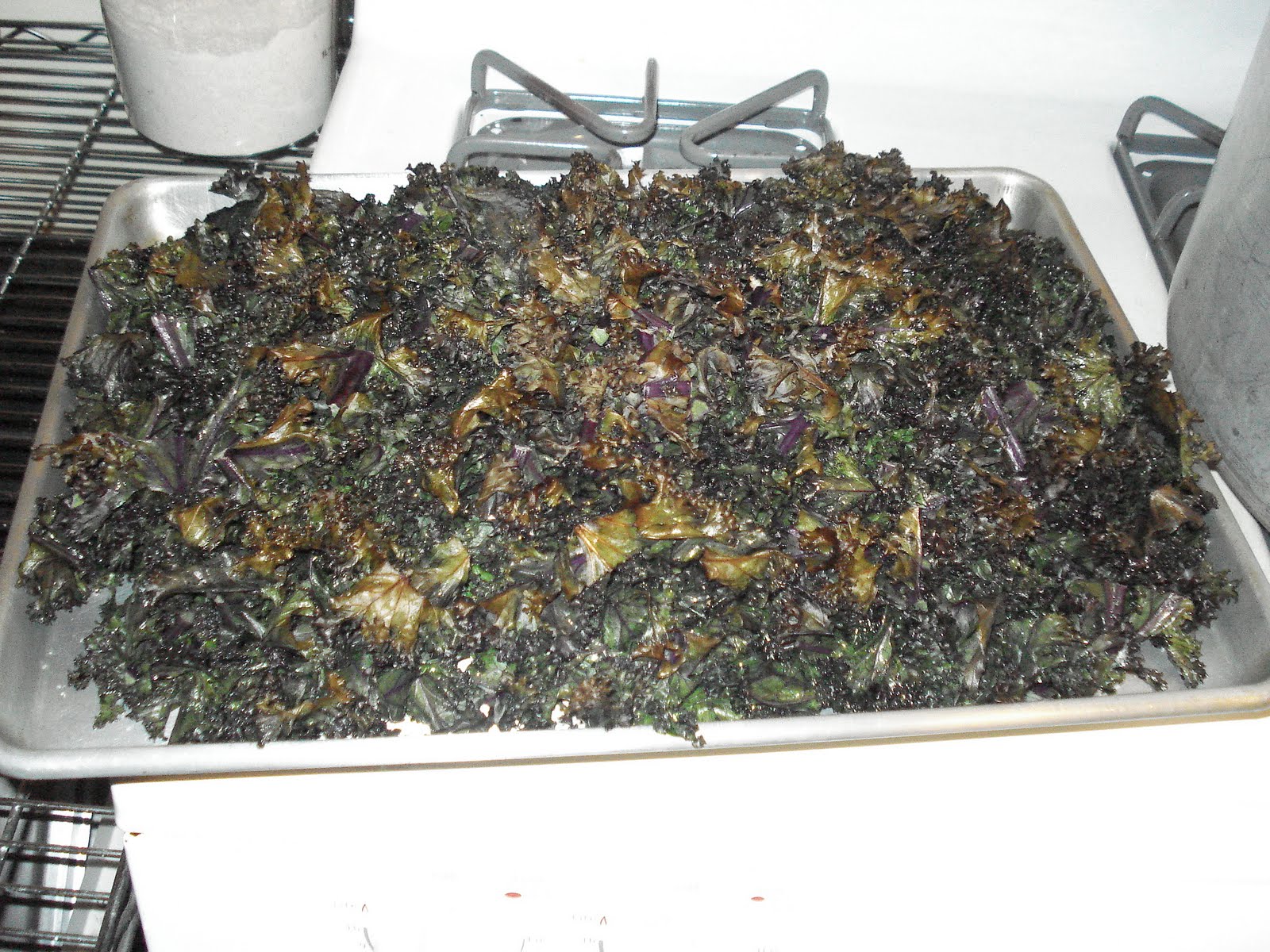
Find a sheet pan that makes the kale looks crowded. Then place in a hot oven, I use a 450 oven at CR.

Roast until the top layer is brownish, and you can start to smell the kale. It take about 15-20 minutes.

At CR the kale then gets moved to the steam table until service. At home I would turn the oven off and leave it in there until you're ready.

When bowling up for service I toss in some more olive oil and salt.

I can't reccommend enough that roasted kale goes fantastically well with roasted sweet potatoes or squash.
 After washing the squash, dry it so it won't slip. Then, using a sharp knife, cut off the stem.
 This is a bit tricky, i stand the squash on its end and very carefully cut it in half.
 Then cut the squash into quarters. I like to cut it into quarters so that there are edges to brown, the brown edges are the best.
 Using a large spoon, scoop out the seeds.
 Lay flat on a well oiled sheet pan.
 Bake in a 450 degree oven until the skin is bubbly and brown. Also when the squash should give easily when poked. I should about an hour, give or take 15 minutes. Once out of the oven let them sit for5 minutes on the sheet.
 After 5 minutes flip them over and let them over and let them rest until they are cool enough for you to handle them.
 When you can handle them safely, scrap the squash from the skin.
 Collect in a pan add Olive oil and salt.
 Use a potato masher to mash and mix the squash.
 There have been arguments over the spaghetti squash. And be sure to look out for teacher Beth on squash days. she may scare you.




 Posts
Posts

